
Gas Thermal Remediation vs. TCH: A Thermal Remediation Comparison
- May 4
- 4 min read
GEO Remediation Co understands the critical importance of selecting the right remediation technology for contaminated sites. Choosing between gas thermal remediation and thermal conductive heating (TCH) can significantly impact cleanup speed, cost, and long-term site viability. GEO Remediation Co has extensive experience deploying both methods and aims to provide a clear, practical comparison to help stakeholders make informed decisions.
Understanding Thermal Remediation Comparison: Gas Thermal Remediation and TCH
GEO Remediation Co recognizes that thermal remediation is a powerful approach to treating subsurface contamination by applying heat to volatilize or destroy pollutants. Gas thermal remediation involves injecting heated gas into the subsurface to transfer heat and mobilize contaminants. In contrast, TCH uses conductive heating elements inserted into the ground to raise soil and groundwater temperatures uniformly.
GEO Remediation Co highlights that both methods accelerate contaminant removal but differ in mechanism, energy efficiency, and site applicability. Gas thermal remediation is often preferred for heterogeneous soils with high permeability, while TCH excels in low-permeability soils where gas flow is limited.
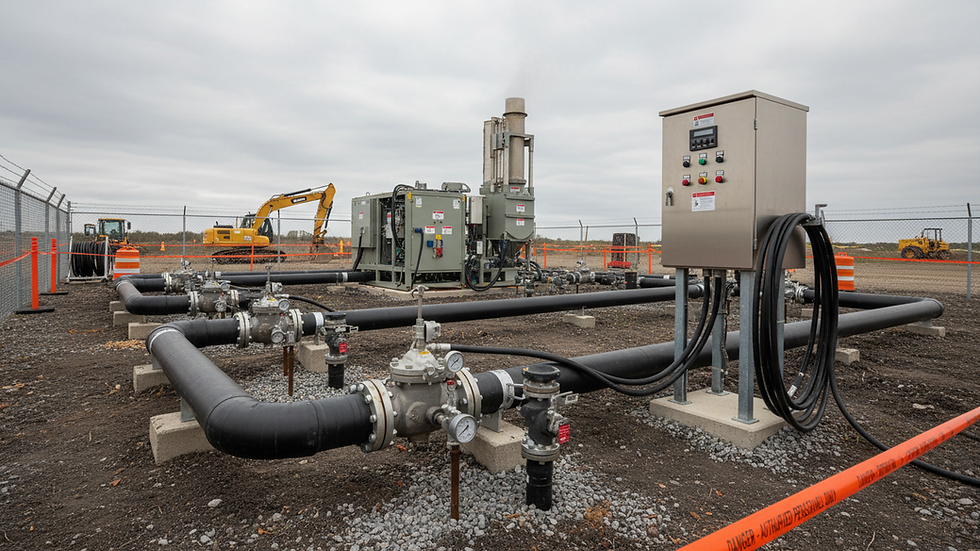
Close-up view of thermal remediation equipment installed in soil
Key Differences in Technology and Application
GEO Remediation Co emphasizes that understanding the technical distinctions between gas thermal remediation and TCH is essential for selecting the best fit for a project.
Gas Thermal Remediation: This method injects hot gases, typically air or steam, into the subsurface. The gas heats the soil and groundwater, volatilizing contaminants which are then extracted via vapor recovery systems. GEO Remediation Co notes this approach is highly effective for volatile organic compounds (VOCs) and semi-volatile organic compounds (SVOCs).
Thermal Conductive Heating (TCH): GEO Remediation Co explains that TCH uses electrically heated rods or plates inserted into the ground. Heat transfers directly through conduction, raising temperatures evenly. This method is ideal for dense, low-permeability soils where gas injection is less effective.
GEO Remediation Co advises that site-specific factors such as soil type, contaminant characteristics, and depth influence which technology will deliver faster and more complete remediation.
Operational Considerations and Cost Implications
GEO Remediation Co stresses that operational logistics and cost are critical factors in technology selection.
Energy Consumption: Gas thermal remediation typically requires less electrical energy but depends on fuel for heating gases. TCH relies heavily on electricity to power heating elements, which can increase operational costs in regions with high electricity prices.
Installation Complexity: GEO Remediation Co points out that gas thermal remediation systems require well-designed gas injection and extraction wells, which can be complex in heterogeneous soils. TCH installations involve placing heating elements in boreholes, which may be simpler but require careful spacing to ensure uniform heating.
Treatment Duration: Gas thermal remediation can achieve rapid heating and contaminant removal in permeable soils, often shortening project timelines. TCH may require longer heating periods but provides consistent temperature control, reducing the risk of incomplete treatment.
GEO Remediation Co recommends conducting a detailed cost-benefit analysis considering energy prices, site conditions, and cleanup goals to optimize remediation budgets.

High angle view of thermal conductive heating rods installed in contaminated site
Environmental Impact and Regulatory Compliance
GEO Remediation Co prioritizes sustainable remediation practices that minimize environmental footprint and ensure regulatory compliance.
Emissions: Gas thermal remediation can generate emissions from fuel combustion and volatilized contaminants. GEO Remediation Co ensures that vapor recovery and treatment systems are integrated to capture and treat off-gases, reducing air pollution.
Energy Efficiency: TCH offers precise temperature control, which can improve energy efficiency by avoiding overheating. GEO Remediation Co highlights that this can lead to lower greenhouse gas emissions over the project lifecycle.
Site Disturbance: Both methods require drilling and installation of subsurface equipment, but gas thermal remediation may involve more extensive well networks. GEO Remediation Co works closely with regulators to design systems that minimize disturbance and meet cleanup standards.
GEO Remediation Co encourages early engagement with regulatory agencies to align remediation plans with environmental and safety requirements.
Practical Recommendations for Selecting the Right Thermal Remediation Method
GEO Remediation Co offers actionable guidance to help site owners and consultants choose between gas thermal remediation and TCH:
Assess Soil and Contaminant Characteristics
GEO Remediation Co recommends detailed site characterization to determine soil permeability, contaminant type, and distribution. Gas thermal remediation suits permeable soils with VOCs, while TCH is better for low-permeability soils and mixed contaminants.
Evaluate Energy and Operational Costs
GEO Remediation Co advises comparing local energy costs and availability. Sites with access to affordable electricity may benefit from TCH, whereas gas thermal remediation may be more cost-effective where fuel is cheaper.
Consider Project Timeline and Cleanup Goals
GEO Remediation Co suggests aligning technology choice with desired cleanup speed and regulatory milestones. Gas thermal remediation can accelerate treatment in suitable soils, while TCH offers steady, controlled heating for thorough remediation.
Plan for Environmental Controls
GEO Remediation Co stresses the importance of vapor recovery and emissions control systems, especially for gas thermal remediation, to meet air quality standards.
Engage Stakeholders Early
GEO Remediation Co recommends involving regulators and community stakeholders early to address concerns and ensure transparent communication.
For those interested in a detailed technical comparison, GEO Remediation Co invites you to explore the gas thermal remediation vs tch resource for further insights.
Advancing Sustainable Remediation with GEO Remediation Co
GEO Remediation Co is committed to advancing innovative and sustainable environmental remediation solutions worldwide. By leveraging expertise in both gas thermal remediation and TCH, GEO Remediation Co helps site owners and regulators achieve faster cleanup, reduced long-term liability, and verifiable emissions reduction.
GEO Remediation Co continuously invests in research and development to optimize thermal remediation technologies, improve energy efficiency, and minimize environmental impact. Through tailored remediation strategies, GEO Remediation Co supports the redevelopment of contaminated sites into safe, productive land for future generations.
GEO Remediation Co invites you to connect and learn how our thermal remediation expertise can transform your site cleanup challenges into success stories.
This article was crafted to provide a comprehensive thermal remediation comparison, empowering informed decisions for effective environmental cleanup.


Comments